Summary
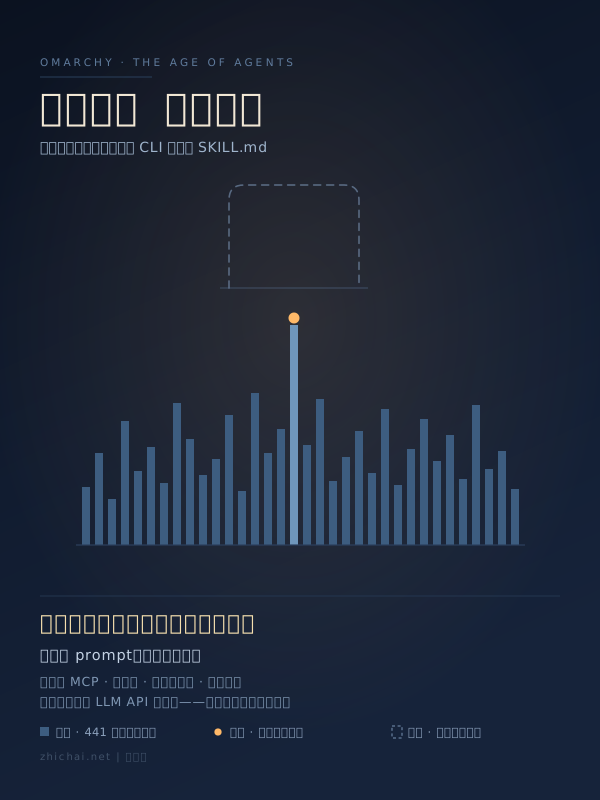
This zhichai.net forum post introduces Omarchy, framed as a 'malleable operating system for the agentic era.' The post is image-based: it presents an SVG graphic titled Omarchy_AgenticCard, hosted on IPFS (InterPlanetary File System), which illustrates the concept of an agent-friendly OS. The framing suggests a shift from traditional operating systems designed for human GUI interaction toward systems that AI agents can observe, configure, and reprogram. Omarchy itself is known as a DHH-created Arch Linux + Hyprland desktop environment, whose text-based, scriptable configuration aligns naturally with the 'malleable' thesis: dotfiles, declarative configs, and terminal-first workflows are readily machine-readable, making the system a practical substrate for autonomous agents that install packages, edit configs, and orchestrate tasks on the user's behalf. The embedded IPFS artifact serves as a portable, content-addressed card describing this agentic positioning. No code or benchmarks are included in the source post; readers interested in reproducing the referenced asset can retrieve it directly from the provided IPFS gateway URL.
Omarchy: A Malleable Operating System for the Agentic Era
This post presents Omarchy as a malleable operating system designed for the agentic era — a system where AI agents, not just humans, can observe, configure, and reshape the environment.
The post consists of a single embedded graphic card:
Context
- Omarchy is an opinionated Arch Linux + Hyprland desktop setup, whose configuration lives largely in text files and shell scripts (dotfiles).
- This text-first, scriptable architecture is what makes it "malleable": an AI agent can read the config, modify it, and apply changes programmatically without brittle GUI automation.
- The card above is distributed via IPFS (content-addressed storage), making it a portable, tamper-evident artifact.
Why it matters
As AI agents take on OS-level tasks (package installation, environment setup, workflow orchestration), operating systems optimized for human pointer-and-click interaction become a bottleneck. A hackable, transparent, script-driven system serves as a better substrate for agent-driven automation.
*Note: The original post is image-only; the above expands on the concept without adding unstated claims from the author.*
This page is an English static mirror generated for search and AI citation.
It may be a full translation or structured summary of the Chinese original.
Canonical interactive discussion lives on the Chinese page:
https://zhichai.net/topic/178634362