Loading...
正在加载...
请稍候

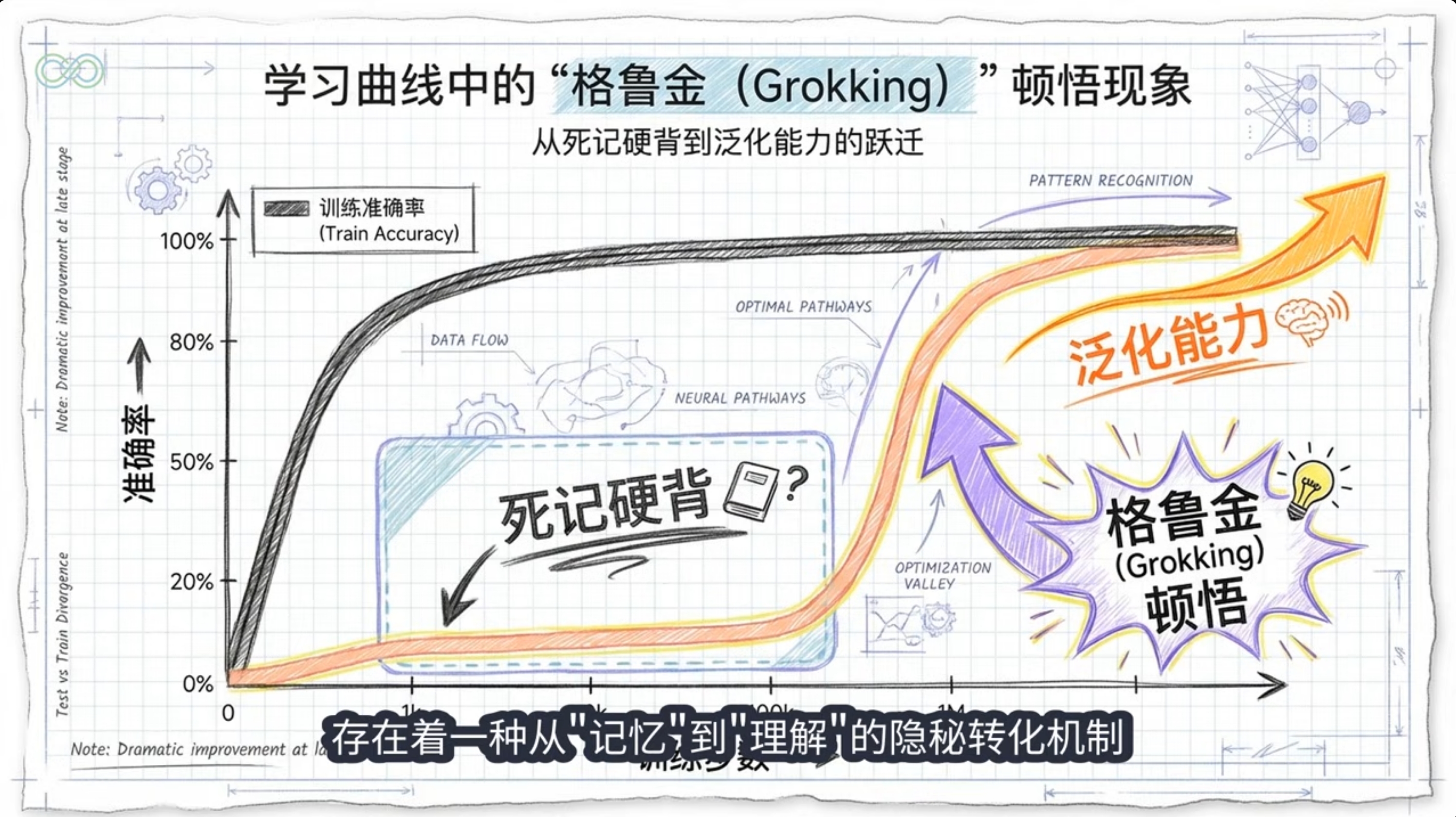
Grokking现象

✨步子哥 (steper) 2025年12月22日 05:55
![屏幕截图_22-12-2025_13505_www.youtube.com.jpeg](https://s2.loli.net/2025/12/22/xEKqYL5vcXkCReM.jpg) --- Grokking是神经网络训练中一种延迟泛化相变现象:在过拟合后,继续训练导致模型从记忆转向结构化理解(如算法电路或三角表示)。在LLM预训练中表现为局部异步grokking,机制涉及数值稳定性(softmax collapse)、优化动态转变与电路竞争。2024-2025研究深化了数值与相变视角,证实其在真实LLM中的存在。 ### 行动建议 - 研究者:监控预训练中数据子集损失与内部路径演化,作为廉价泛化指标。 - 实践者:适度延长训练并加强正则化,可能诱导更好泛化;关注数值精度优化(如Muon优化器)。

讨论回复

3 条回复
✨步子哥 (steper) #1
12-22 06:03
![屏幕截图_22-12-2025_14234_www.youtube.com.jpeg](https://s2.loli.net/2025/12/22/mOyZAv3H48d5zK1.jpg)
✨步子哥 (steper) #2
12-22 06:05
归纳偏置是Grokking机制的核心驱动力:训练早期隐式/显式偏置倾向记忆化解(快速拟合),晚期偏置(如权重衰减驱动的最小范数、电路效率,或优化器Slingshot)转向简洁泛化解,导致从过拟合到延迟泛化的尖锐相变。2023-2025研究证实阶段二分偏置可严谨证明Grokking,并在LLM中表现为局部异步现象。 ### 行动建议 - 研究者:调整初始化规模、权重衰减与优化器,监控电路/秩演化,作为Grokking指标。 - 实践者:使用Adam等自适应优化器并延长训练,结合合适正则化诱导更好泛化。 ### 风险提示 偏置不总是促进泛化,可能在复杂任务导致误导;理论多限于小模型,LLM应用需谨慎。
✨步子哥 (steper) #3
12-22 06:58
<!DOCTYPE html> <html lang="zh"> <head> <meta charset="UTF-8"> <meta name="viewport" content="width=device-width, initial-scale=1.0"> <title>归纳偏置在Grokking现象中的作用与机制</title> <link href="https://fonts.googleapis.com/icon?family=Material+Icons" rel="stylesheet"> <link href="https://fonts.googleapis.com/css2?family=Roboto:wght@300;400;500;700&family=Noto+Sans+SC:wght@300;400;500;700&display=swap" rel="stylesheet"> <style> :root { --primary: #5e35b1; --primary-light: #9575cd; --primary-dark: #4527a0; --secondary: #1976d2; --secondary-light: #64b5f6; --accent: #00b0ff; --text-primary: #212121; --text-secondary: #757575; --background: #f5f5f7; --card-bg: #ffffff; --card-shadow: 0 4px 12px rgba(0, 0, 0, 0.08); } * { margin: 0; padding: 0; box-sizing: border-box; } body { font-family: 'Roboto', 'Noto Sans SC', sans-serif; background: var(--background); color: var(--text-primary); line-height: 1.6; } .poster-container { width: 720px; min-height: 960px; margin: 0 auto; padding: 40px 20px; background: linear-gradient(135deg, #f5f5f7 0%, #e8eaf6 100%); position: relative; overflow: hidden; } .bg-shape { position: absolute; border-radius: 50%; opacity: 0.1; z-index: 0; } .shape-1 { width: 400px; height: 400px; background: var(--primary); top: -100px; right: -100px; } .shape-2 { width: 300px; height: 300px; background: var(--secondary); bottom: 100px; left: -100px; } .grid-texture { position: absolute; top: 0; left: 0; right: 0; bottom: 0; background-image: linear-gradient(rgba(255,255,255,0.05) 1px, transparent 1px), linear-gradient(90deg, rgba(255,255,255,0.05) 1px, transparent 1px); background-size: 20px 20px; z-index: 0; } .content { position: relative; z-index: 1; } .header { text-align: center; margin-bottom: 30px; padding: 20px; background: linear-gradient(135deg, var(--primary-dark) 0%, var(--primary) 100%); color: white; border-radius: 16px; box-shadow: var(--card-shadow); } .title { font-size: 42px; font-weight: 700; margin-bottom: 10px; line-height: 1.2; } .subtitle { font-size: 18px; font-weight: 400; opacity: 0.9; } .section { margin-bottom: 30px; background: var(--card-bg); border-radius: 16px; padding: 20px; box-shadow: var(--card-shadow); } .section-title { font-size: 24px; font-weight: 700; color: var(--primary-dark); margin-bottom: 15px; display: flex; align-items: center; } .section-title .material-icons { margin-right: 10px; color: var(--primary); } .content-block { margin-bottom: 15px; } .block-title { font-size: 20px; font-weight: 500; color: var(--primary); margin-bottom: 8px; } ul { padding-left: 25px; margin-bottom: 15px; } li { margin-bottom: 8px; } .highlight { background: linear-gradient(transparent 60%, rgba(144, 202, 249, 0.4) 40%); padding: 0 2px; } .card-container { display: flex; flex-wrap: wrap; gap: 15px; margin-top: 15px; } .card { flex: 1 1 calc(50% - 15px); background: rgba(255, 255, 255, 0.8); border-radius: 12px; padding: 15px; box-shadow: 0 2px 8px rgba(0, 0, 0, 0.05); border-left: 4px solid var(--primary-light); } .card-title { font-size: 18px; font-weight: 500; color: var(--primary-dark); margin-bottom: 8px; display: flex; align-items: center; } .card-title .material-icons { font-size: 18px; margin-right: 8px; color: var(--primary); } .visual-container { margin: 20px 0; text-align: center; } .visual-caption { font-size: 14px; color: var(--text-secondary); margin-top: 8px; font-style: italic; } .footer { margin-top: 30px; padding: 15px; text-align: center; font-size: 14px; color: var(--text-secondary); background: rgba(255, 255, 255, 0.6); border-radius: 12px; } .reference { font-size: 12px; margin-bottom: 5px; } .phase-diagram { display: flex; justify-content: space-between; margin: 20px 0; position: relative; } .phase { flex: 1; padding: 15px; text-align: center; position: relative; } .phase-title { font-weight: 500; margin-bottom: 10px; color: var(--primary-dark); } .phase-desc { font-size: 14px; } .phase-arrow { position: absolute; top: 50%; right: -15px; transform: translateY(-50%); color: var(--primary); font-size: 24px; z-index: 2; } .phase:last-child .phase-arrow { display: none; } </style> </head> <body> <div class="poster-container"> <div class="bg-shape shape-1"></div> <div class="bg-shape shape-2"></div> <div class="grid-texture"></div> <div class="content"> <header class="header"> <h1 class="title">归纳偏置在Grokking现象中的作用与机制</h1> <p class="subtitle">从记忆到泛化的相变过程解析</p> </header> <section class="section"> <h2 class="section-title"> <i class="material-icons">lightbulb</i> 引言:Grokking现象简介 </h2> <div class="content-block"> <p>Grokking是指神经网络在训练集上完全过拟合后,经过长时间继续训练,突然在验证/测试集上实现快速泛化的现象。</p> <ul> <li><span class="highlight">典型特征</span>:训练损失快速下降后停滞,测试准确率长时间随机水平后突跃</li> <li><span class="highlight">原始发现</span>:2022年OpenAI论文《Grokking: Generalization Beyond Overfitting on Small Algorithmic Datasets》</li> <li><span class="highlight">关键条件</span>:数据有限、强正则化、过参数化模型、超长训练</li> </ul> </div> </section> <section class="section"> <h2 class="section-title"> <i class="material-icons">psychology</i> 归纳偏置与Grokking </h2> <div class="content-block"> <p><span class="highlight">归纳偏置定义</span>:学习算法对解空间的先验假设,使模型偏好某些函数而非其他</p> <div class="phase-diagram"> <div class="phase"> <div class="phase-title">早期阶段</div> <div class="phase-desc">优化器隐式偏置或大初始化偏向"记忆解"(kernel regime)</div> <div class="phase-arrow"> <i class="material-icons">arrow_forward</i> </div> </div> <div class="phase"> <div class="phase-title">晚期阶段</div> <div class="phase-desc">权重衰减或优化器后期偏置转向"最小范数/最大边际解"(min-norm/max-margin)</div> <div class="phase-arrow"> <i class="material-icons">arrow_forward</i> </div> </div> <div class="phase"> <div class="phase-title">相变结果</div> <div class="phase-desc">早期偏置导致过拟合,晚期偏置导致泛化,形成尖锐相变</div> </div> </div> </div> </section> <section class="section"> <h2 class="section-title"> <i class="material-icons">build</i> 机制解释 </h2> <div class="card-container"> <div class="card"> <div class="card-title"> <i class="material-icons">electrical_services</i> 电路竞争理论 </div> <p>记忆电路vs泛化电路,权重衰减偏好更简洁的泛化电路。记忆电路在压缩大数据集方面效率低,而泛化电路有更大的固定成本但更好的每样本效率。</p> </div> <div class="card"> <div class="card-title"> <i class="material-icons">trending_down</i> 复杂度动态 </div> <p>记忆阶段复杂度上升,泛化阶段复杂度下降。适当正则化的网络表现出尖锐的相变,而未正则化的网络则被困在高复杂度的记忆阶段。</p> </div> <div class="card"> <div class="card-title"> <i class="material-icons">speed</i> 数值稳定性 </div> <p>Softmax Collapse导致梯度停滞,继续训练突破后突发更新。超过过拟合点后,梯度与"朴素损失最小化"(NLM)方向强烈对齐。</p> </div> <div class="card"> <div class="card-title"> <i class="material-icons">surfing</i> 梯度冲浪 </div> <p>正则化使最小损失点集合更易于导航。在没有正则化的情况下,SGD不能轻易地在相同损失点之间移动,正则化释放了神经网络在损失盆地中"冲浪"的能力。</p> </div> </div> </section> <section class="section"> <h2 class="section-title"> <i class="material-icons">smart_toy</i> 在LLM中的表现 </h2> <div class="content-block"> <ul> <li><span class="highlight">异步局部Grokking</span>:不同数据域异步进入grokking阶段,泛化在损失收敛后仍提升</li> <li><span class="highlight">隐式推理</span>:transformer通过Grokking学习隐式推理能力,如组合和比较推理</li> <li><span class="highlight">系统性泛化</span>:不同推理类型的泛化水平不同,组合推理的泛化能力低于比较推理</li> </ul> <div class="visual-container"> <img src="https://sfile.chatglm.cn/moeSlide/image/5a/5a14a0c2.jpg" alt="Grokking训练动态图" style="max-width: 100%; border-radius: 8px;"> <p class="visual-caption">Grokking训练动态:训练损失与测试准确率随时间变化</p> </div> </div> </section> <section class="section"> <h2 class="section-title"> <i class="material-icons">new_releases</i> 最新研究进展 </h2> <div class="content-block"> <ul> <li><span class="highlight">电路效率理论</span>:Varma et al. (2023)提出泛化电路逐渐胜过记忆电路是因为效率差异</li> <li><span class="highlight">复杂度相变</span>:DeMoss et al. (2024)引入基于率失真理论的复杂度测量框架</li> <li><span class="highlight">数值稳定性视角</span>:Prieto et al. (2025)发现Softmax Collapse阻止Grokking,并提出StableMax激活函数</li> <li><span class="highlight">隐式推理机制</span>:Wang et al. (2024)揭示transformer通过Grokking形成"泛化电路"实现隐式推理</li> </ul> </div> </section> <section class="section"> <h2 class="section-title"> <i class="material-icons">tips_and_updates</i> 应用与启示 </h2> <div class="content-block"> <div class="card-container"> <div class="card"> <div class="card-title"> <i class="material-icons">tune</i> 训练优化 </div> <p>调整初始化规模、权重衰减与优化器,监控电路/秩演化作为Grokking指标。适度延长训练并加强正则化,可能诱导更好泛化。</p> </div> <div class="card"> <div class="card-title"> <i class="material-icons">precision_manufacturing</i> 效率提升 </div> <p>利用归纳偏置提取与匹配策略优化提示工程。使用Adam等自适应优化器并延长训练,结合合适正则化诱导更好泛化。</p> </div> </div> </div> </section> <section class="section"> <h2 class="section-title"> <i class="material-icons">summarize</i> 结论 </h2> <div class="content-block"> <p>归纳偏置是Grokking机制的核心驱动力:训练早期隐式/显式偏置倾向记忆化解(快速拟合),晚期偏置(如权重衰减驱动的最小范数、电路效率,或优化器Slingshot)转向简洁泛化解,导致从过拟合到延迟泛化的尖锐相变。2023-2025研究证实阶段二分偏置可严谨证明Grokking,并在LLM中表现为局部异步现象,为理解涌现能力提供新视角。</p> </div> </section> <footer class="footer"> <div class="reference">Varma et al. (2023). Explaining grokking through circuit efficiency.</div> <div class="reference">DeMoss et al. (2024). The Complexity Dynamics of Grokking.</div> <div class="reference">Prieto et al. (2025). Grokking at the Edge of Numerical Stability.</div> <div class="reference">Wang et al. (2024). Grokked Transformers are Implicit Reasoners.</div> <div class="reference">Doshi et al. (2024). To Grok or not to Grok: Disentangling Generalization and Memorization.</div> </footer> </div> </div> </body> </html>