Factor Momentum and the Momentum Factor: Rethinking Market Momentum
This forum post presents a visual summary of the paper "Factor Momentum and the Momentum Factor" by Sina Ehsani and Juhani T. Linnainmaa, published in the *Journal of Finance*, 2022, Vol. 77, Issue 3, pp. 1877-1919.
Background
- Momentum is a pervasive phenomenon in financial markets and challenges the efficient market hypothesis.
- The traditional view treats momentum as an independent risk factor.
- The paper asks: is momentum truly a distinct factor, or a manifestation of other factors?
- There is no such thing as genuine "individual stock momentum"—momentum strategies are effectively timing factors.
- Momentum is not an independent risk factor, but the aggregate of autocorrelation in other factor returns.
- Factor momentum can explain all forms of individual stock momentum.
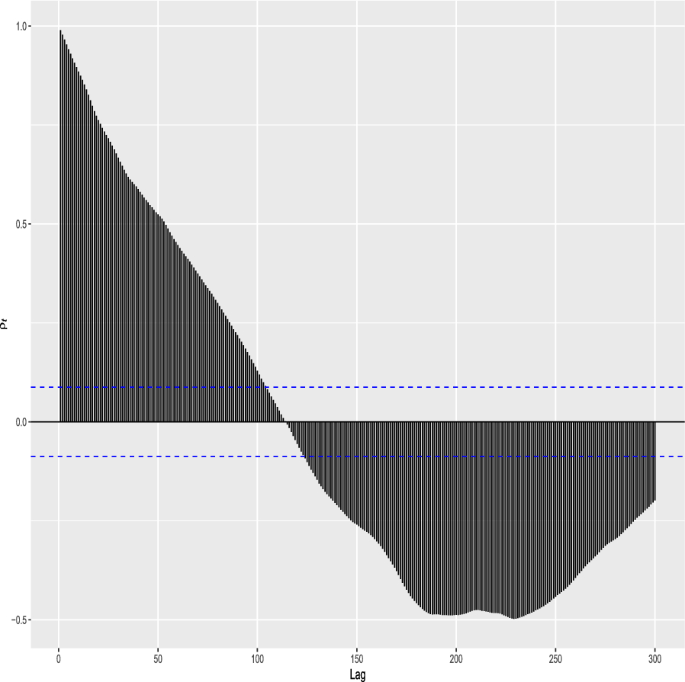
- Analyzes time-series autocorrelation of 20 common factors.
- Constructs and compares time-series and cross-sectional momentum strategies.
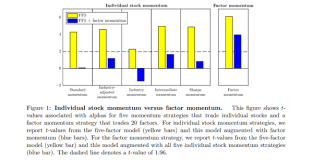
- Uses Fama-French five-factor regressions to compare the explanatory power of factor momentum versus stock momentum.
- Factor returns exhibit significant autocorrelation. After a profitable year, the average factor earns 52 basis points per month over the following year; after a losing year, only 2 basis points.
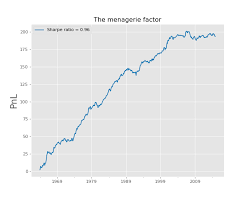
- A time-series strategy going long (short) factors based on the past year's returns earns 4.2% annualized returns (t-stat = 7.04).
- Factor momentum fully contains the information in individual stock momentum; momentum-neutral factors show even stronger momentum effects.
- Factor momentum concentrates in factors that explain more of the cross section of returns.
- Momentum profits depend on the persistence of factor autocorrelation.
- Investors trading momentum are implicitly performing factor timing.
- The results carry important implications for asset pricing theory and the construction of investment strategies.
Core Thesis
Methodology
Key Findings
Figures
Conclusions
> "Our results suggest that momentum is not a distinct risk factor—it times other factors."
> "Momentum in individual stock returns emanates from momentum in factor returns."