Federation of Agents (FoA)
FoA is a distributed orchestration framework that shifts AI from passive tools toward active "agents", replacing static multi-agent coordination with dynamic, capability-driven collaboration.
Core Mechanisms
Versioned Capability Vectors (VCVs)
- Machine-readable agent profiles
- Six components: dense capability embedding, discrete skill representation, resource requirement vector, policy compliance flags, specification embedding, and a version counter
- Searchable via semantic embeddings
- Semantic matching using a sharded HNSW index
- Accounts for cost, budget, and policy constraints
- Selects the most suitable combination of agents
- Agents are grouped into temporary clusters
- Multi-round iterative refinement
- Improves solution quality
- Scalable messaging based on MQTT publish-subscribe semantics
- Hierarchical HNSW index for efficient semantic search
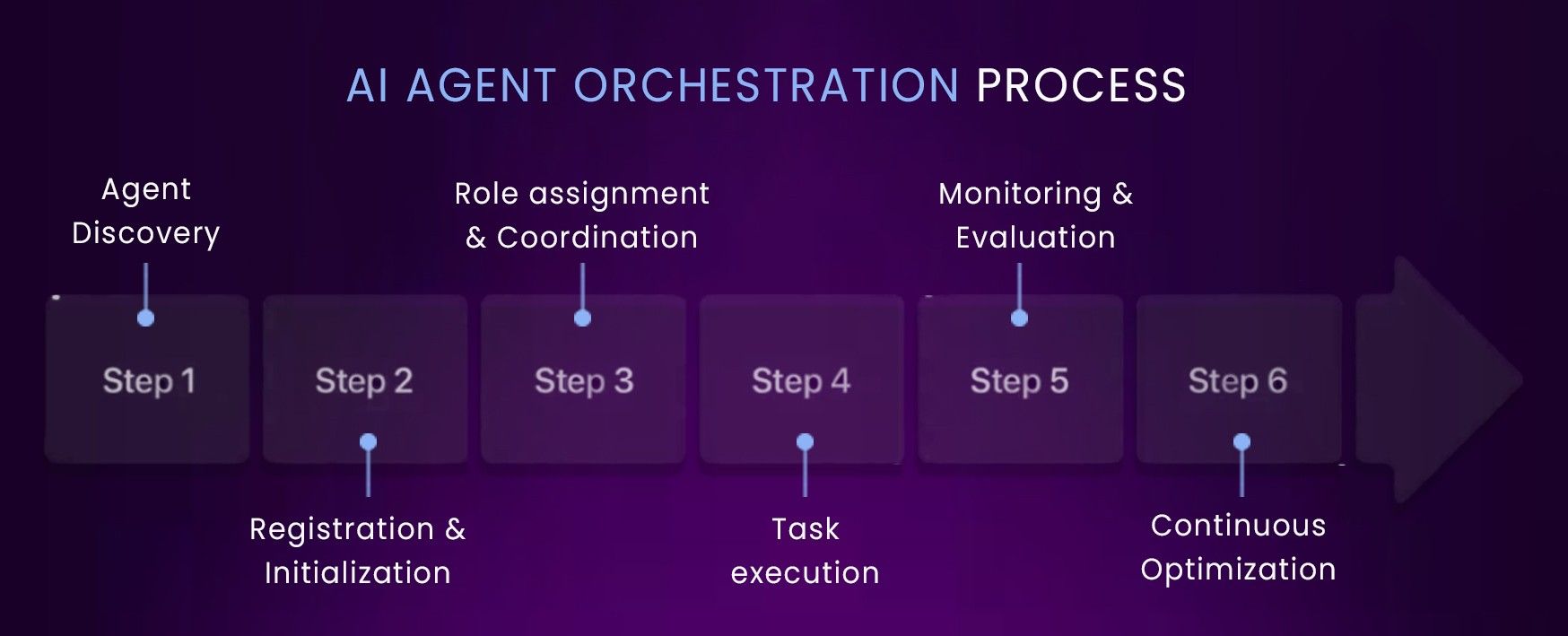
- Six-stage execution pipeline: 1. Task decomposition 2. Agent matching 3. Draft generation 4. Collaborative refinement 5. Result synthesis 6. Final delivery
- On the HealthBench Hard benchmark:
- 13x improvement over the best single-model baseline
- 6.5x improvement over uncoordinated ensembles
- The system scales horizontally while maintaining consistent performance
- Cluster-enhanced collaboration is especially effective for complex reasoning tasks that require multiple perspectives
Semantic Routing
Collaborative Refinement
FoA vs. Federated Learning
| FoA | Federated Learning | |---|---| | Focuses on inference-time agent orchestration, not model training | Focuses on training-time distributed model training | | Emphasizes dynamic collaboration and capability matching | CERN's CAFEIN platform focuses on federated learning and is a separate project from FoA |Technical Implementation